California
Garage door repair in Contra Costa County, CA
Garage door repair in Contra Costa County, CA is sorted below by what failed: a spring, a cable, the track or the opener. Half the homes in Contra Costa County were built before 1978 (Census ACS 2019–2023). Contra Costa County averages 19 days a year with a low at or below 32°F (NOAA 1991–2020 normals).
Call (866) 332-1030 to schedule a visitCalls may be recorded. Describing the problem commits you to nothing.
Towns and communities in Contra Costa County
- Concord
- Antioch
- Richmond
- San Ramon
- Pittsburg
- Walnut Creek
- Brentwood
- Oakley
- Danville
- Martinez
- Pleasant Hill
- San Pablo
- Hercules
- El Cerrito
- Lafayette
- Bay Point
- Orinda
- Pinole
- Moraga
- El Sobrante
- Discovery Bay
- Alamo
- Clayton
- Blackhawk
- Rodeo
- Contra Costa Centre
- Camino Tassajara
- Saranap
- Kensington
- Tara Hills
- Pacheco
- San Miguel
- North Richmond
- Crockett
- Rollingwood
- Vine Hill
- East Richmond Heights
- Reliez Valley
- Bayview
- Bethel Island
- Montalvin Manor
- Mountain View
- Knightsen
- Byron
- Castle Hill
- Diablo
- Acalanes Ridge
- Shell Ridge
- Alhambra Valley
- Norris Canyon
- North Gate
- Clyde
- Port Costa
What is different about Contra Costa County
Openers older than the safety rule
Half the housing in Contra Costa County was built before 1978. A home that still has the opener it was built with may have one older than the federal protections: openers made for sale after January 1, 1991 have had to reverse on contact, and a second, external protection, usually photo-eye sensors near the floor, was required from 1993. If yours has no sensors near the floor, run the reverse test before anything else.
Source: U.S. Census Bureau, American Community Survey 2019–2023 5-year estimates; CPSC Publication 523, non-reversing automatic garage door openers
Mild winters
Contra Costa County sees 19 days a year when the low reaches 32°F or colder, on average, at the nearest NOAA climate normals station, about 3 miles away. In a freeze, the rubber seal along the bottom of a door can stick to the floor; free it before blaming the opener.
What stopped working?
-
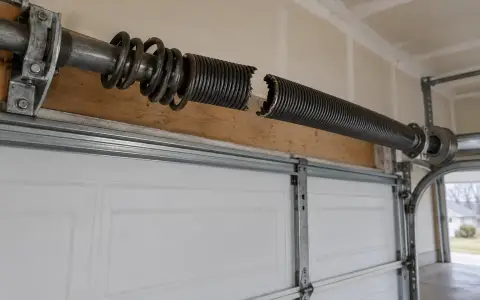 Broken springA loud bang, then a door that lifts a few inches or feels far too heavy.
-
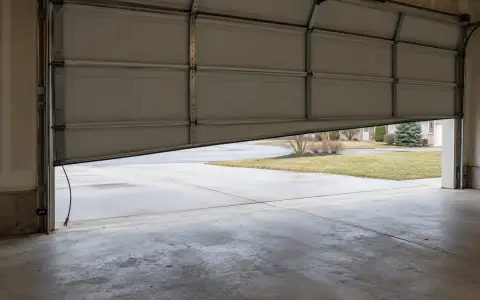 Snapped cableThe door hangs crooked, or a cable dangles beside the track.
-
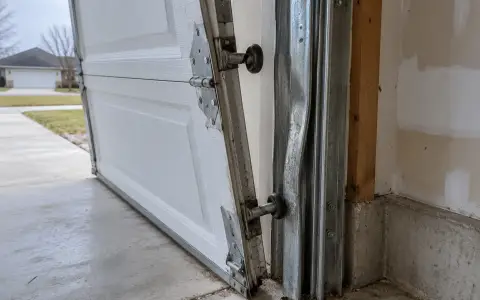 Off trackRollers have left the track and the door tilts, binds or grinds.
-
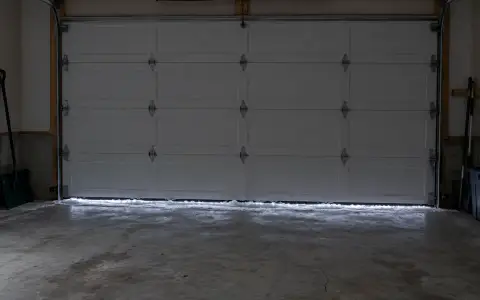 Won't openNothing happens, the opener hums, or the door lifts a few inches and quits.
-
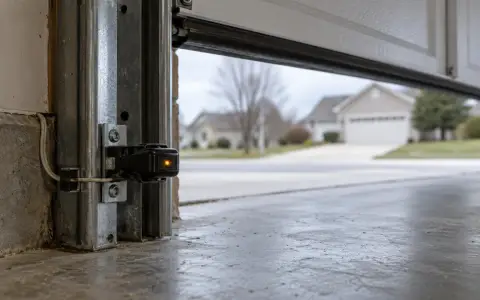 Won't closeThe door starts down and goes back up, or closes only while the button is held.
-
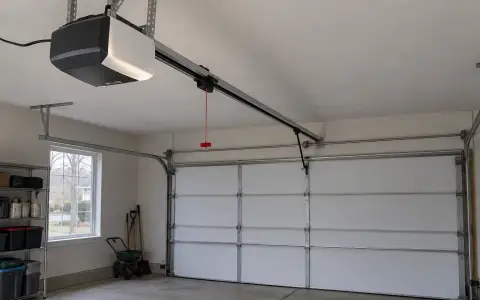 Opener runs, door doesn'tThe motor hums or runs and the door stays where it is.
-
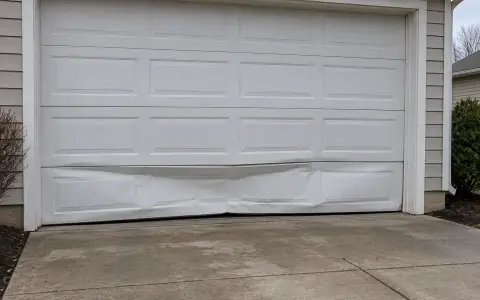 Car hit the doorPanels bent, tracks pushed out, and the garage may not close.
Who licenses the work in California
California has a license class for this work: D-28, Doors, Gates and Activating Devices. The CSLB describes it as a contractor who "installs, modifies or repairs all types of residential, commercial or industrial doors including overhead or sliding door assemblies." Under Business and Professions Code § 7048, a state license is needed for a job of $1,000 or more in labor and materials, or for any job that requires a building permit, and the small-job exemption does not cover anyone who advertises as a contractor or has employees.
Look up a license with the Contractors State License Board (CSLB)
California requires anyone hired to service or repair a residential opener to check, when the work is done, whether it reverses on contact with a rigid obstacle two inches high, and to affix a red certificate to an opener that fails (Health & Safety Code § 19890(e)). Since July 1, 2019, openers installed in the state must have a battery backup, and a replacement door may not be connected to an existing opener without one (§ 19892).
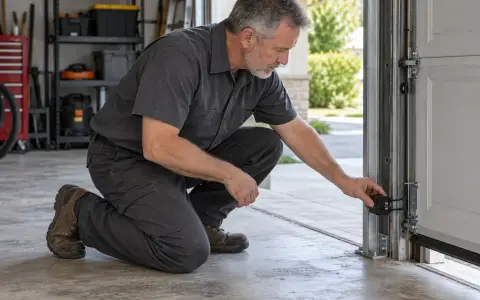
What you will be asked
- What stopped working, in one sentence: a bang and then the door would not lift, a crooked door, a door that goes back up.
- The door: sectional panels or one solid piece, one car wide or two, and roughly how old.
- The springs: a coil on a bar above the door, or springs along the tracks, and whether one shows a gap.
- The name on the opener’s motor housing, and roughly how old it is.
- Whether the door is open or closed right now, and whether a car is inside.
The line takes: repair, replacement and installation of garage doors and openers, for owners and renters, at homes and at commercial buildings. It is not for: buying parts, doors on box trucks and trailers, or a price quoted over the phone without a visit. The price is named after someone has seen the door.